Coast planner
Bondi and the coastal walk: choose the right-sized route
Sydney's eastern coast rewards an early start and a flexible finish. You do not need to complete every kilometre for the walk to be worthwhile, especially in heat, wind or crowded conditions.

Choose the finish before taking the first step
| Route shape | What it suits | Exit decision |
|---|---|---|
| Bondi Beach and headland sample | Limited time or uncertain weather | Return to the Bondi Beach bus corridor before committing south |
| Bondi to Bronte | A shorter one-way coast walk with two beach areas | Check the current bus from Bronte rather than assuming a rail connection |
| Bronte to Coogee | Travellers prioritising cliffs and the southern section | Start and finish use different bus corridors |
| Bondi to Coogee | Full route, commonly described as about 6 km and 2–3 walking hours | Keep extra time for photos, swimming, food and waiting for the return bus |
The time estimate is not a booking window. Heat, crowds, swimming, stairs and stops can make the total outing much longer. Waverley Council’s beaches and coast page and Destination NSW’s Bondi to Coogee overview should be checked alongside live transport.
The route is a series of choices
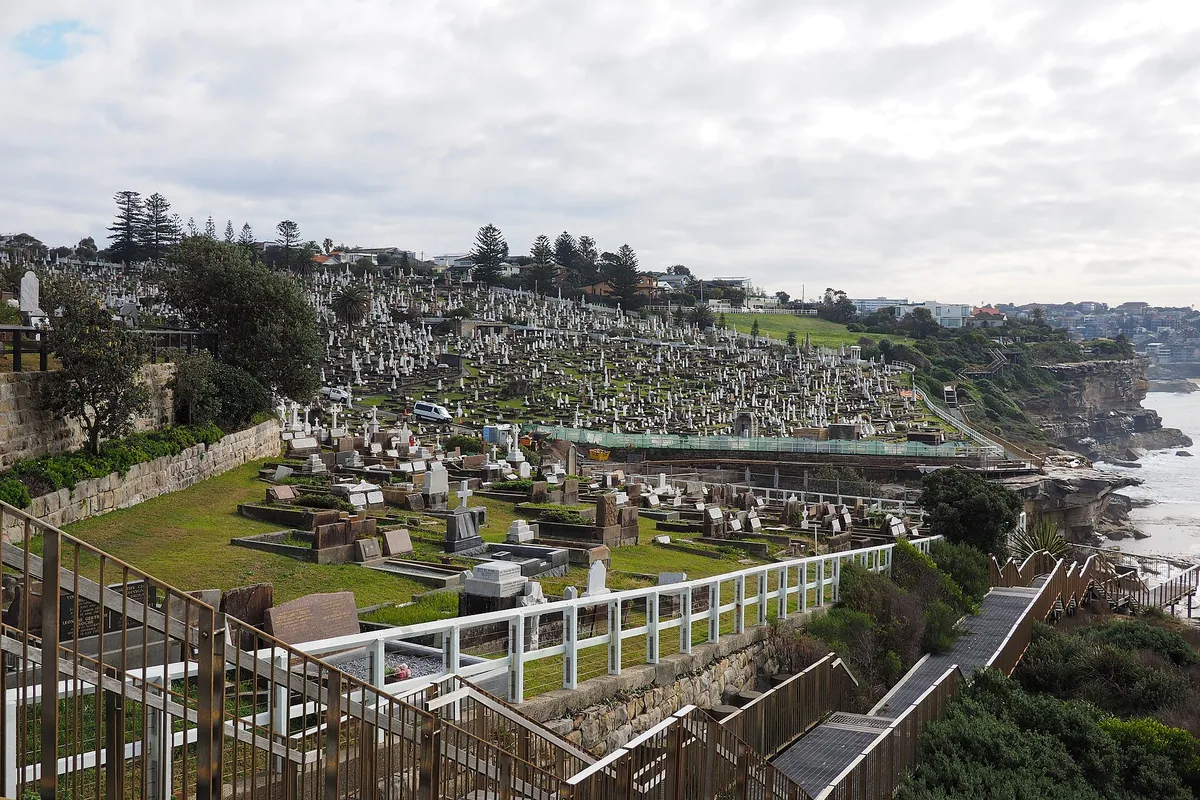
The coast walk links beaches, headlands, parks and residential edges. Many visitors speak about it as a single Bondi-to-Coogee task, but shorter sections are complete experiences. Waverley Council’s planning material describes its portion through Bondi, Tamarama and Bronte and onward toward Coogee; conditions and temporary diversions remain more important than a fixed distance printed in an article. There is no railway station at Bondi Beach or Coogee, so the first and last bus legs belong to the walk plan.
Consult the council’s current parks, beaches and coastal information before setting out. If a section is closed, do not improvise around barriers.
Choose a direction and an exit
Decide whether the beach, the walk or swimming is the priority. An out-and-back from Bondi provides a simple exit. A one-way walk needs a public-transport plan from the finishing suburb. A family or mixed-mobility group may prefer one headland section with a long beach pause.
Save the exact stop for the return route in the Transport for NSW Trip Planner. Bondi Junction is a rail interchange inland; Bondi Beach is reached by onward road transport. Do not build a tight evening connection on the assumption that the beach has a train station. Save the actual finish stop before leaving reliable reception and check that the chosen service runs at the time you expect.
Expect exposure and gradients
The path includes slopes, stairs and sections with limited shade. Wind and reflected heat can make a mild forecast feel different on the headlands. Carry water, use sun protection and turn around before fatigue removes your comfortable exit options.
After rain, surfaces may be slippery. Large events can create diversions or crowding. The correct response is to shorten or postpone, not to treat completion as a travel achievement that overrides local instructions.
Beach safety is a separate decision
Seeing the beach does not mean conditions are suitable for swimming. Patrol status, currents, surf and water quality can change. Use Beachsafe for current information, swim between the red and yellow flags where a beach is patrolled, and follow lifesaver directions.
Do not infer that a busy beach, calm-looking water or confident local swimmers make an unpatrolled section safe. If in doubt, keep the day to the shore and pool or choose another activity.
Three route sizes
Short coast sample
Spend time at Bondi, walk to a headland viewpoint or the next suitable stopping point, then return the same way. This works when weather is uncertain or the group needs a predictable exit.
Beach-to-beach section
Choose two neighbouring beaches and use the intervening path as the focus. Confirm whether the finish has the facilities and transport your group needs.
Longer one-way day
Commit to a longer coastal sequence only after checking weather, closures, daylight and the return route. Leave enough time for pauses; the walk is not an urban footpath commute.
If the weather closes in
Avoid replacing a wet exposed walk with a rushed cross-city attraction. Shorten the coastal section and use a nearby indoor venue, cafe or sheltered neighbourhood plan whose opening status you have verified. Alternatively, move the coast to another day and use the Sydney things-to-do guide to build an indoor cluster.
Final check
- Council notices and path closures
- Beachsafe patrol and hazard information
- Water, sun protection and suitable footwear
- The return stop and live service
- A shorter turnaround point
- Accessibility of the exact chosen section
The coastline is not improved by finishing it quickly. A route that matches the group and conditions will reveal more of it.
Addresses and meeting points
Put the activity on the map
Use these points for orientation. Your dated ticket or operator confirmation takes priority if it names a different entrance, wharf or meeting point.
Bondi Pavilion
Queen Elizabeth DriveNSW 2026 Bondi BeachAustraliaA useful north-end orientation point; the signed coast route runs south past Tamarama and Bronte toward Coogee.