Harbour planner
A Sydney Harbour day that leaves room for the harbour
The harbour core contains several of Sydney's biggest names within walking distance, but security, hills, tour check-in and the temptation to keep stopping make a simple route better than a crowded one.

Decide which kind of harbour time you are buying
| Choice | Commitment | Starting point | What to verify |
|---|---|---|---|
| Public foreshore walk | Flexible | Circular Quay east or west | Heat, rain, event closures and return route |
| Opera House tour | Fixed check-in; current standard route is 60 minutes | Welcome Centre for several tours; Stage Door for some specialist/access tours | Exact product, meeting point, stairs and bag rules |
| BridgeClimb | About 2–3.5 hours depending on route | 3 Cumberland Street, The Rocks | Route, steps, ladders, health rules and weather policy |
| Public ferry | Timetabled transport | Numbered Circular Quay wharf | Destination, stopping pattern, wharf and live disruption |
| Commercial boat activity | Roughly a short ride to a half-day product | Operator-specific pontoon or wharf | Vessel, inclusions, access, weather and return point |
Use the Opera House route guide, BridgeClimb comparison and harbour boat guide for those three decisions. They should not be treated as interchangeable “harbour attractions.”
Pick a side of Circular Quay first
Circular Quay is the natural hinge between the Opera House side and The Rocks side. Both are easy to see on a map; both expand once you begin walking. Decide which side contains the day’s main experience and treat the other as a flexible extension.
On the eastern side, the foreshore leads toward the Sydney Opera House and the Royal Botanic Garden. On the western side, The Rocks rises into lanes, museums, bridge approaches and Barangaroo connections. Crossing between them is straightforward, but doing it repeatedly wastes the best part of the day.
Opera House: outside, inside or performance
These are different plans. A waterfront walk gives exterior views and needs no tour ticket. An official building tour has a meeting point and check-in procedure. A performance introduces venue entry, seat and finishing-time considerations.
The Opera House currently offers several tour formats and languages; routes inside can vary around rehearsals and performances. The standard tour and Architectural Tour currently involve roughly 300 stairs, while the Mobility Access Tour follows a separate step-free plan. Read our tour and meeting-point comparison, then the official tours page for the chosen date. Visitors with mobility, hearing, vision or sensory requirements should use the venue’s current access information before booking.
Avoid attaching a tight lunch or ferry departure immediately after a tour. The building is active, and the route or finish point may not match an assumed schedule.
Bridge: choose the experience you mean
Seeing the Sydney Harbour Bridge, walking across its pedestrian path, visiting a lookout and joining a commercial climb are separate experiences. Current BridgeClimb routes range from the UnderBridge Walk below the arch to summit and full-crossing products; advertised totals range from 398 to 1,621 steps. Use our route-by-route BridgeClimb guide before the operator’s booking flow. A climb is a timed, controlled activity with health, height, clothing and personal-item rules, updated on the operator’s health and safety page.
If the climb does not suit the group, the harbour day still works. Use foreshore viewpoints or investigate a pedestrian crossing plan. Do not treat a demanding paid experience as the only valid way to understand the bridge.
Add one ferry journey with a purpose
A ferry is most useful when it deposits you at the next part of the itinerary. Milsons Point can pair with the north side of the bridge and Luna Park; other services support different harbour or coastal plans. The scenic element is a benefit, not a guarantee that every route runs at the preferred time.
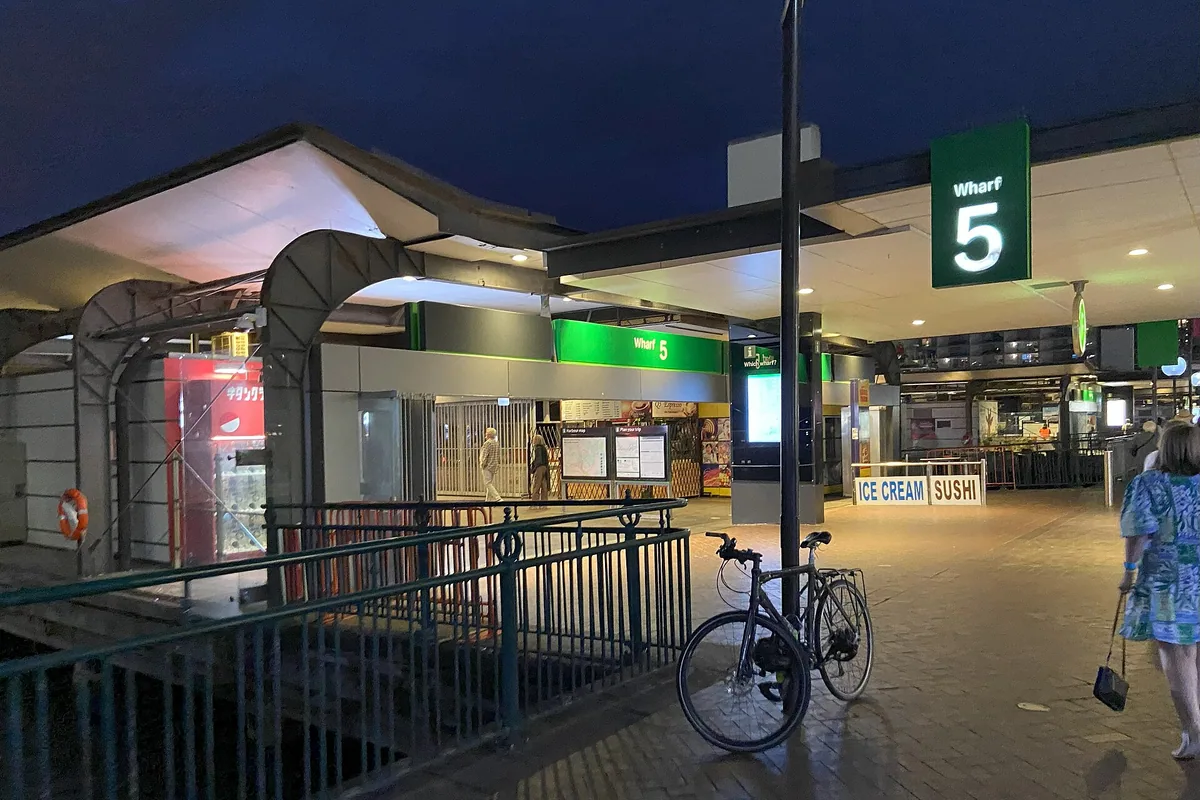
Use the Transport for NSW Trip Planner shortly before departure. Note the wharf number, allow boarding time and keep a train or bus alternative when a later booking matters. If the purpose is a narrated cruise, tall ship, jet boat or kayak rather than transport, compare the distinct Sydney Harbour tour formats and follow the operator’s named pontoon.
Three workable shapes
Architecture and gardens
Begin around Circular Quay, take a booked Opera House experience, then continue into the gardens or along the eastern foreshore. Keep the afternoon flexible around weather and the group’s walking capacity.
History and bridge
Start in The Rocks, use a museum or guided walk as the anchor, then approach the bridge or Barangaroo according to energy and daylight. This route rewards slower observation more than another cross-city booking.
Harbour crossing
Walk one side of Circular Quay, take a ferry to a destination that can occupy the next part of the day, and return by a different mode if that simplifies the evening. Check the last practical return rather than assuming the ferry will remain the best option.
What to verify that morning
- transport alerts and the correct wharf;
- tour meeting points and bag rules;
- heat, wind and rain exposure;
- accessibility across the whole route;
- sunset and the final transport connection;
- any major event affecting pedestrian movement.
The best harbour day usually contains white space. It is where views, changing light and an unexpected ferry movement become part of the trip rather than a delay to the next reservation.
Addresses and meeting points
Put the activity on the map
Use these points for orientation. Your dated ticket or operator confirmation takes priority if it names a different entrance, wharf or meeting point.
Circular Quay
Alfred StreetNSW 2000 SydneyAustraliaCheck the numbered wharf on the live trip result; commercial cruises can use different pontoons.
Sydney Opera House
Bennelong PointNSW 2000 SydneyAustraliaTour meeting points differ by product; the dated ticket is more specific than the general venue pin.